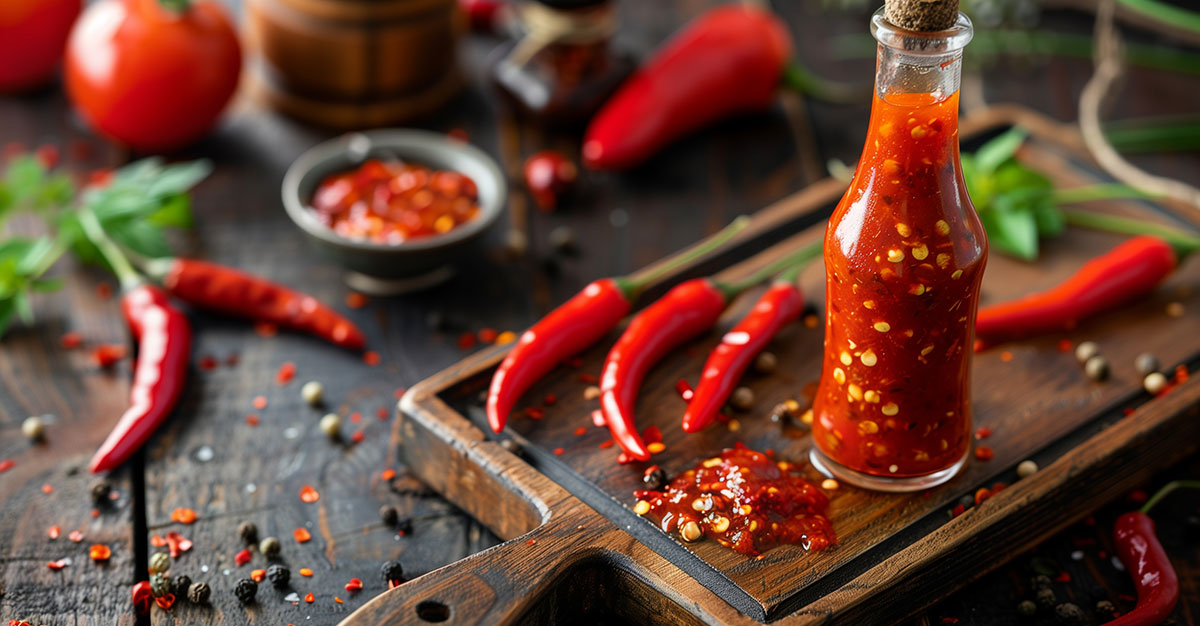
I started making hot sauce the same way a lot of people start hobbies. I was standing in my kitchen one fall weekend, looking at a pile of peppers from a local farm stand, and thinking, “There has to be something better I can do with these than toss them into chili.” I like bold flavor, and I like making things with my hands. Hot sauce felt like the perfect little project.
I did not realize at the time that this hobby would teach me a lot about product development. Not in a fancy business school way. In a real, messy, taste-it-and-fix-it way. The kind of learning that sticks.
Why I Started Making Hot Sauce
I have always enjoyed foods with some heat, but I never loved how most store sauces taste the same. Too much vinegar. Too much sugar. The heat is there, but the flavor is flat. I wanted a sauce that worked like a condiment, not a dare. Something you could put on eggs, tacos, grilled chicken, and even a burger without it taking over everything.
Also, I am a dad, and my kitchen is usually a busy place. Making hot sauce fit into that rhythm. Pick a weekend. Chop peppers after the kids go to bed. Let a batch ferment while life keeps moving. It is satisfying because you can see the process happening right in front of you.
Experimenting in Small Batches
The first batch I made was simple. Jalapeños, garlic, vinegar, salt. I blended it, poured it into a jar, and felt pretty proud.
Then I tasted it.
It was fine. Not great. It was hot, but it needed something. I added a bit of honey. Better. I added lime juice. Better again. I tried a second batch with some roasted poblanos mixed in, and suddenly the sauce had depth.
That is when I realized the best part of small-batch work. You are not stuck with a huge run of something that is not right. If a batch is off, you learn quickly, and you adjust. You do not waste a ton of time or money. You waste a few peppers and an afternoon, and that is a fair price for learning.
This is the same idea I used when I was building businesses. Start small. Test quickly. Improve as you go. It is way easier to steer a canoe than a cruise ship.
Getting Real Feedback
After a few rounds, I got brave and started handing bottles to friends and family. I did not say, “Tell me if you like it.” People will be polite if you ask that way. I said, “Be honest, what is missing?”
The feedback was gold. One friend said the heat hit too fast. My brother said he loved the flavor but wanted a thicker texture. My wife said one batch was too smoky for her taste, but another was perfect on roasted veggies.
Every comment helped. I kept notes on everything. What peppers I used, how long I fermented, how much salt, whether I roasted the garlic or not. I learned to treat my kitchen like a mini lab, but still a fun one.
Feedback is not always comfortable, but it is necessary. If you are making something for other people, you need to know what they actually experience, not what you hope they experience.
Iteration Is the Whole Game
I do not believe in the “one perfect recipe” idea. Hot sauce taught me that perfection is a moving target. You get close, then you refine.
One batch would be great for tacos but too sharp for eggs. Another would be smooth and rich but not hot enough for the spice lovers in my circle. So I kept iterating. I tweaked ratios. I swapped in different peppers. I learned that fermentation time changes not just heat, but the way flavors blend.
Over time, I landed on a few “house styles.” A bright, everyday sauce. A deeper roasted one. A fruit-forward one for summer grilling. None of those came from a master plan. They came from doing, tasting, listening, and adjusting.
That cycle is product development in real life. You make the thing. You test it. You learn what people actually want. You make it better. Then you do it again.
Product Market Fit, Hot Sauce Edition
When people talk about product-market fit, it can sound like a boardroom term. For me, it feels more like this. Are people reaching for the bottle again after they try it? Are they asking for more? Do they find ways to use it that I did not expect?
The moment I knew I was close was when a buddy texted me a week after I gave him a bottle and said, “I ran out. When are you making more?” That is product-market fit. Not because I convinced him. Because the sauce earned a spot in his kitchen.
With Woodbridge Farms, I think the same way. You can build something you love, but if customers do not love it too, it will not last. The only way to find that match is testing in the real world.
What Hot Sauce Keeps Reminding Me
This hobby keeps me grounded. It reminds me that good products are not born in a single flash of genius. They are built through trial, error, and patience.
It also reminds me to stay curious. Some of my best batches happened because I tried a weird idea. Like adding roasted pineapple to a habanero base. I was not sure it would work. It ended up being a favorite.
And it reminds me that the simplest way to improve something is to keep showing up. Make another batch. Take another note. Ask another person to try it. Progress is not dramatic. It is steady.
Time Flies When You’re Having Fun
I still make hot sauce for fun. It is a hobby, not a business. But I love how it connects to the way I think about building anything. Start small. Learn fast. Listen hard. Iterate without ego.
Whether I am in my kitchen blending peppers or working on a new product for Woodbridge Farms, the lesson is the same. The best way to get it right is to be willing to get it wrong a few times first. And if you can enjoy the process, that is even better.